



The news cycle has felt uncomfortably heavy of late. Arrests for alleged misconduct in public office have unsettled confidence in civic institutions. At the same time, the Church of England has faced arrests connected to assault allegations, and the unravelling of safeguarding failures continues to plague this island. These stories are different in detail, but they converge on a shared concern: what happens when authority, given for service, becomes a source of harm?
It would be easy — and tempting — to frame this as a matter for them: public officials, senior clergy, institutions at a distance. Yet Lent does not allow us that luxury. The ash placed on the forehead is not a commentary on other people’s shortcomings. It is traced on each of us. ‘Remember that dust thou art, and to dust thou shalt return.’ And that dust clings to the foot of a cross.
If Lent means anything, it must inform how we live as Christians. The Church speaks often of repentance, renewal, and reform. These words are woven into our liturgies. They should be disciplines that shape our habits. That is why the way we keep Lent matters.
In many Church of Ireland settings, Lent is acknowledged but not always felt. The colour of the altar — sorry, table — frontal changes. Otherwise, the tone remains much the same. This is an observation about how easily the Church can smooth over its sharper edges. Yet there is wisdom in allowing this season to renew us more deliberately.
In my own churchmanship, the A-word is buried for the duration of Lent. The Gloria is not sung. As Passiontide approaches, crucifixes and statues are veiled. The sanctuary is stripped and looks bereft. The atmosphere tangibly shifts. Something is intentionally missing. When Easter comes — with fire, incense, and the sudden return of all*luias — the effect is not manufactured exuberance but release. The delight is intensified because it has been awaited.
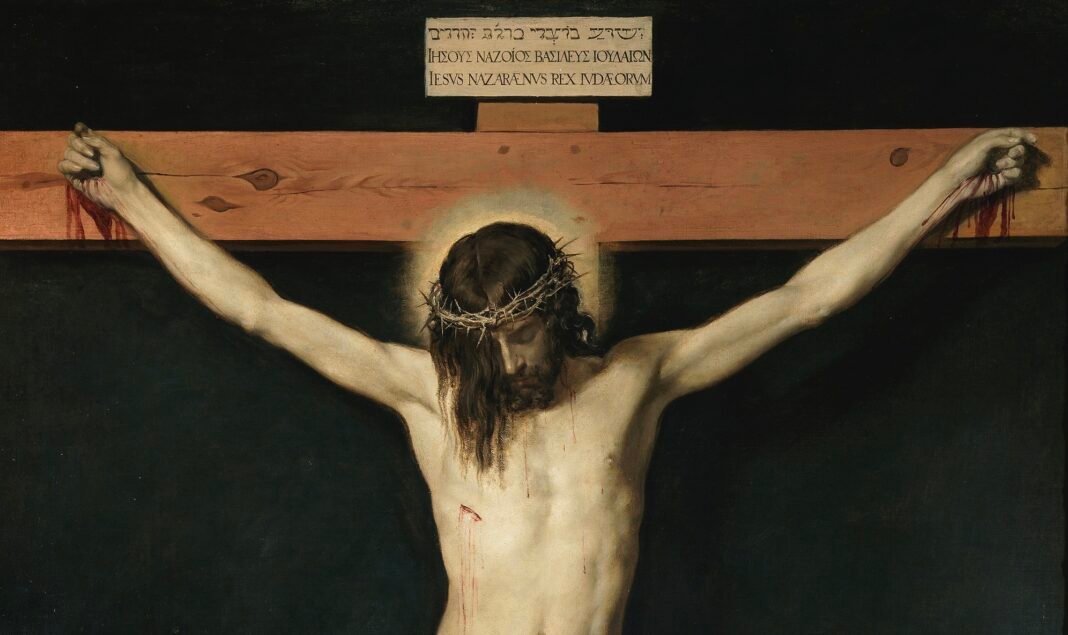
This is because the Church does not move straight from Palm Sunday to Easter morning. We must pass through Gethsemane, through betrayal, through a trial in which authority is grotesquely abused. We must watch a governor wash his hands whilst condemning innocence. We must stand beneath a cross erected by a system anxious to preserve order. The Passion is not only the story of private suffering; it is the exposure of corrupted power.
Our present failures — ecclesial or civic — are not comparable to the suffering of Christ. We are not saviours; we are implicated. Yet the pattern is uncomfortably familiar. Authority given for service becomes self-protective. Institutions close ranks. The cross stands as God’s judgement on such distortions — and as God’s refusal to abandon those crushed by them.
Liturgy trains us to inhabit that story bodily and patiently. It teaches us that resurrection follows crucifixion; that confession precedes absolution; that glory is not seized but given. If images are veiled, it is because we are learning to see again — to see what we have preferred not to notice.
When we hear of misconduct in public office, or safeguarding failures within the Church, we are reminded that authority can be misused by people very like us. Christian theology has never been naïve about this. Augustine’s account of the will or the Reformers’ insistence on human fallenness were not rhetorical flourishes. They were sober assessments of the human condition. Institutions are shaped by the people who inhabit them. So are our churches.
If our worship remains relentlessly upbeat, we may find ourselves ill-equipped to respond when reality intrudes. But if our liturgy allows space for the acknowledgement of brokenness, then when failures come to light — in the Church or beyond it — we need not scramble for defensiveness. We have already practised telling the truth about ourselves before God. This teaches us that the Church’s story already contains injustice. But the story does not end there.
If we confess ‘we have erred and strayed from thy ways like lost sheep’, we must allow that confession to shape our habits. If we proclaim forgiveness, we must also commit to amendment of life — including structures that protect the vulnerable and hold leaders accountable. To take ourselves seriously as a Church does not mean self-importance. It means recognising that the things we handle — scripture, sacrament, souls — are weighty. It means allowing our seasons to do their work on us.
When Easter comes, and the first fire is lit, and the A-word is sung again, the joy is hard-won hope. Lent is the participation in the Passion of the Lord: an invitation to the Church to believe what we say, and to show forth in our lives what we believe.