



The tone of the Gazette has changed, and it would be dishonest to pretend otherwise. In recent years, we have spoken with cautious optimism about our future — about renewal, digital growth, and new ways of telling the Church’s story. As we begin this year, that optimism has given way to something more urgent. This is a moment of reckoning.
The financial position of the Gazette is grave. For the first time in its long history, we are unable to meet even the most modest of our ordinary commitments. We can no longer afford to pay contributors. We cannot meet routine bills as they fall due. Even the £30 monthly crossword prize — a small but much-loved feature — has become unsustainable. If that sounds trivial, I hope it communicates just how serious the situation has become.
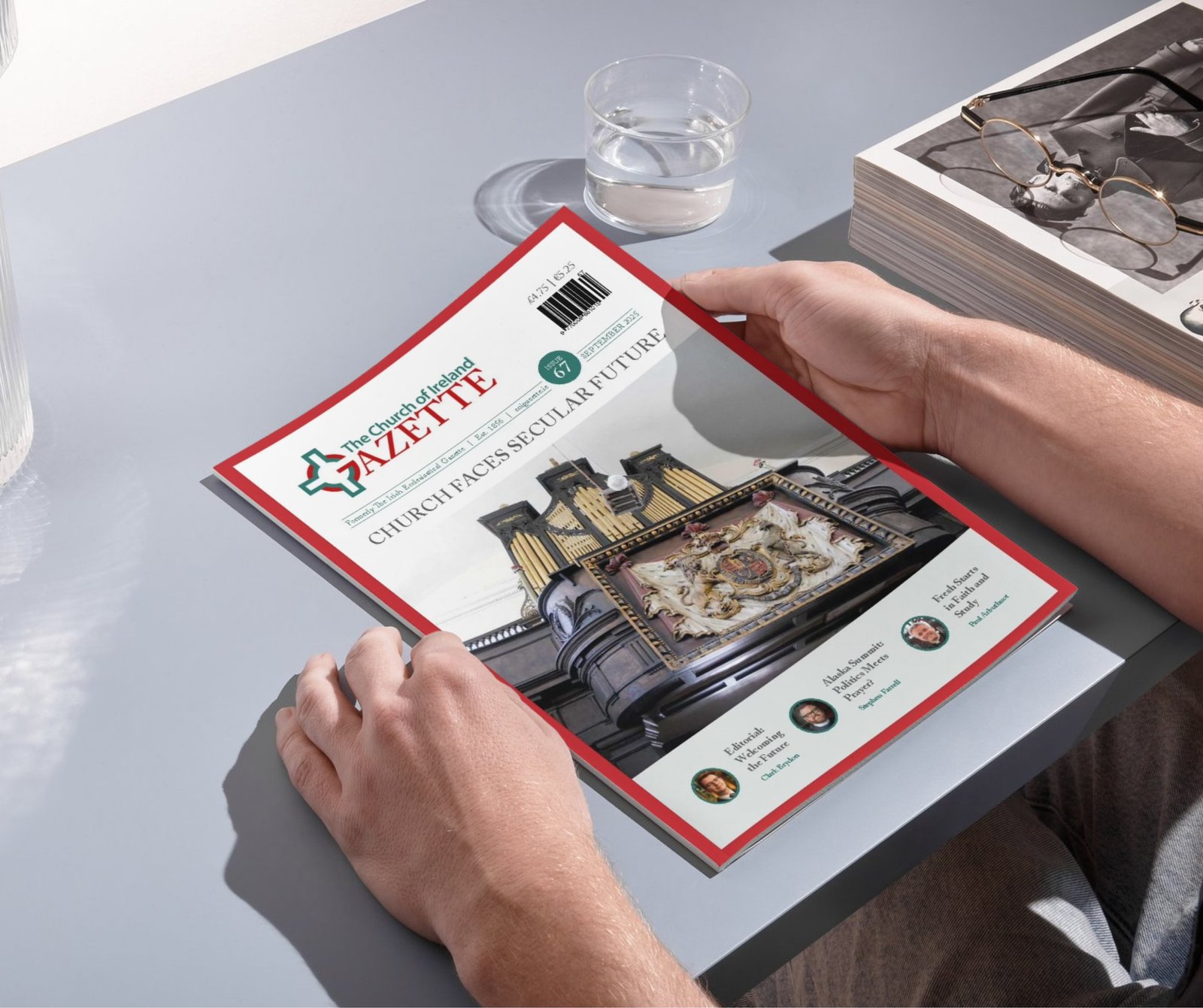
Support from central Church funds, which in the past provided a degree of stability, will only take us so far. The Board has been clear with me: unless something changes, this will be the final year in which the Gazette appears in print.
The Gazette is an editorially independent journalistic endeavour. It exists not to flatter the Church, but to report on it honestly and, at times, to hold it to account. That independence matters. It is therefore perfectly reasonable that central Church bodies may be reluctant to fund indefinitely a publication that can, on occasion, be a thorn in their side. Napoleon is reputed to have said that he feared four hostile newspapers more than a thousand bayonets. A free press is rarely comfortable for those in authority — but it is vital.
What is not sustainable, however, is a model in which an independent publication depends on a single source of grant funding, with the constant risk that support may be withdrawn when scrutiny becomes inconvenient or finances tighten.
In response, every possible saving has already been made. Administrative costs have been pared back to the bare minimum. The Gazette’s administration now relies almost entirely on the goodwill and voluntary labour of Board members and others who give their time freely. That dependence is one of the reasons some readers have experienced delays or difficulties in receiving their copy each month. There is no longer any slack in the system. There is no one left to cut.
Looking ahead, the Representative Church Body cannot guarantee funding beyond the end of this year. The consequence is stark: without a significant change in our circumstances, the Gazette will be forced to move to an online-only edition.
I want to be clear. I am a strong advocate for our digital presence. The online Gazette allows us to publish quickly and to engage in ways that print cannot. It is an essential part of our future. But I do not believe it should be our only avenue.
An online-only Gazette would inevitably exclude some readers. It would further distance those already on the margins of digital life. More than that, it would sever one of our greatest strengths. The reality is that most of our readership — beyond the occasional dramatic headline shared on social media — encounters the Gazette in print, through the parish network: handed across a church porch or left on a hall table. To abandon that lightly would be to cut off our nose to spite our face.
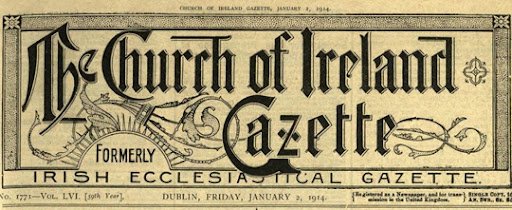
I was recently reading the digitised archive of the Gazette. The first issue declared: ‘We have long felt it desirable that there should be some means of making the Clergy in Ireland acquainted with all that is going on in the Ecclesiastical world. We trust that our paper will effect this.’ In 1856, every clergyman received a free copy. That is not financially possible now. Yet today, a significant number of Church of Ireland clergy do not take the Gazette at all, and some never have. Then, as now, the editors wrote: ‘We feel assured, if they do thus support us, that our paper will, under Divine blessing, be found useful.’ I find myself wondering whether, in another 170 years, there will be any archive material from 2026 onwards if we cease printing now.
So I write this plainly: we need help.
We need new subscriptions. We need renewed subscriptions. We need donations, large and small. We need those who value the Gazette — as a record of the Church’s life and as a space for thoughtful disagreement.
I do not believe this paper is finished. I believe the tide can still be turned. But it will not be turned by optimism alone, nor by appeals to history, nor by goodwill stretched ever thinner. It will only be turned if readers decide that the Gazette is worth sustaining.
As this issue appears at the threshold of Lent, that may be an uncomfortable thing to hear. Lent is often framed in terms of what we give up. But the Church has always understood it equally as a season of almsgiving — of choosing to support what gives life and serves the common good.
If the Gazette has mattered to you — if it has informed you, challenged you, irritated you, or helped you feel part of the wider Church — then I ask you to consider that this Lent.
I want to change the tide. But I cannot do it alone.
If you can help, please contact me.
Finally, I ask for your prayers: for me, for Aoife, and for the Board, as we seek wisdom and courage in the decisions that lie ahead. Pray that we may be faithful stewards of what has been entrusted to us; that truth may be spoken without fear or favour; and that this work may continue to serve the Church.
And commend the future of the Gazette to God’s providence, in the sure hope that what is offered honestly and humbly may yet bear fruit in its proper season.
Best wishes. Such an important cause. (The Church of Australia here has no newspaper at all, official or independent and is greatly weakened as a result !)