


‘For everything there is a season, and a time for every matter under heaven’ (Ecclesiastes 3:1)
The life of the Church is often marked by seasons. The liturgical year itself teaches us that lesson: Advent gives way to Christmas, Lent to Easter, and Ordinary Time follows once again. The Church’s worship is rooted in continuity, yet that continuity is expressed through movement and change. We are reminded, year after year, that faithfulness is not standing still.
Recent months have brought a notable season of transition across the Church of Ireland. Senior leaders have retired from ministries that they have exercised with distinction and dedication. New responsibilities are being assumed by others. Long-established patterns are changing. Such moments naturally prompt reflection. They invite us to consider how the Church understands continuity, leadership, and the passing of one generation into another.
Scripture offers a perspective rather different from that of the modern world. Contemporary society often prizes novelty for its own sake, whilst institutions can sometimes become preoccupied with preserving themselves unchanged. The biblical witness charts another course. Again and again, God calls his people forward whilst remaining faithful to his promises.
Abraham is called to leave behind the familiar and journey towards an unknown future. Moses leads the people through the wilderness towards a land they have not yet seen. Joshua succeeds Moses. Elijah’s mantle falls upon Elisha. The apostles receive from Christ the ministry that they, in turn, entrust to others. Throughout the biblical narrative, continuity is maintained by ensuring that what is received is faithfully handed on.
The Church has long understood itself in these terms. We are not owners of the ministries and institutions entrusted to us. We are their stewards. Every bishop, priest, deacon, churchwarden, parishioner, volunteer, and editor exercises a responsibility that was received from others and will one day be passed to those who follow. Such a perspective encourages both humility and hope. Humility, because not one of us is indispensable; hope, because the future of the Church does not depend upon any one earthly individual.
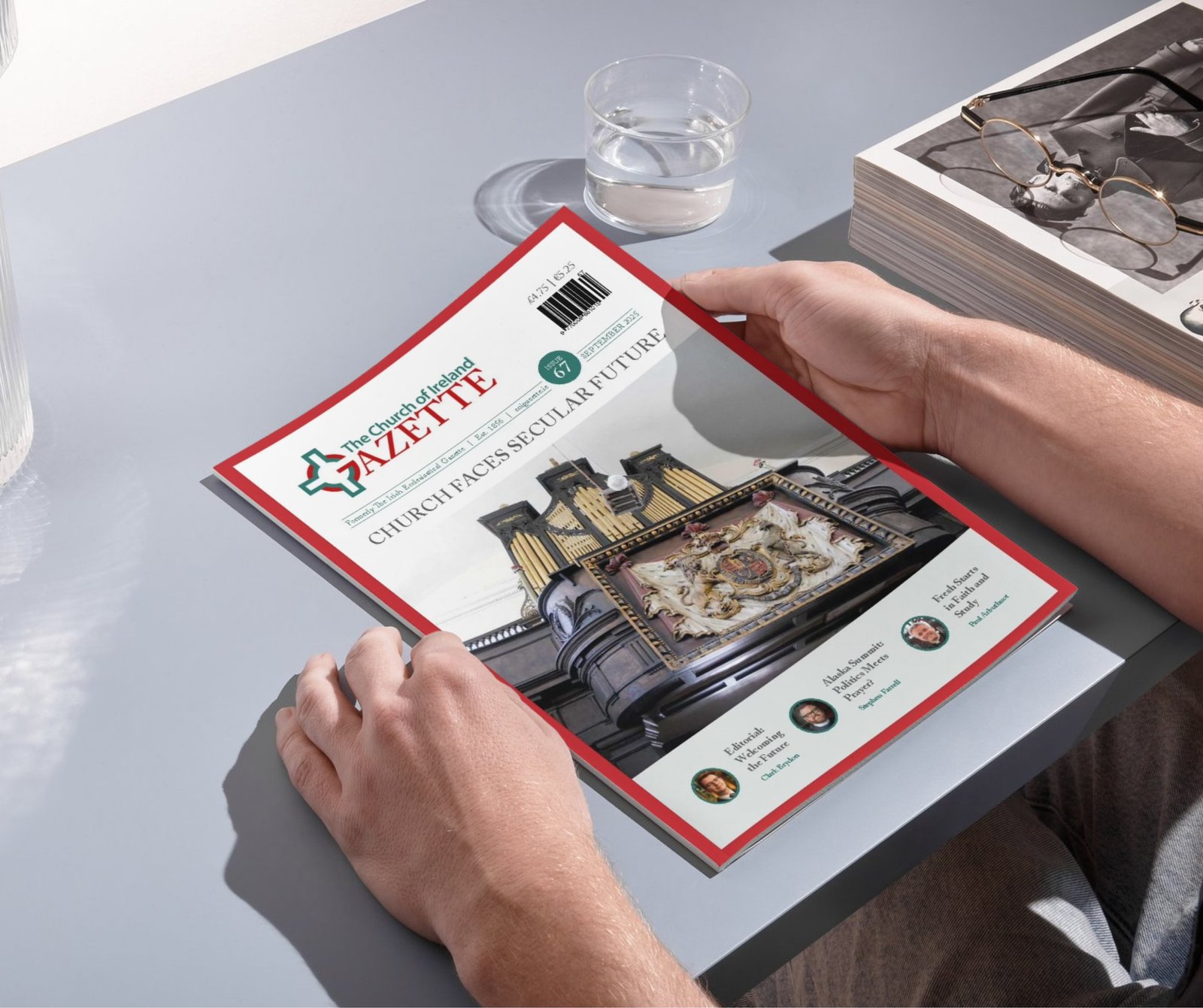
The Church of Ireland Gazette stands within that same tradition. For more than 170 years it has chronicled the life of the Church through periods of remarkable change. It has reported on disestablishment, war, political upheaval, theological controversy, social transformation, and ecclesiastical renewal. As it enters a new chapter in its own life, we do so conscious that it is inheriting a vocation shaped by generations of editors, contributors, and readers. The concerns that dominated one generation have often seemed distant to the next. Yet the Gazette’s vocation has remained essentially unchanged: to inform, to challenge, to encourage and, above all, to help the Church reflect upon its life in the light of the Gospel.
That long perspective is instructive. It reminds us that moments which appear decisive in the present are often revealed, with the passage of time, to be chapters within a much larger story. The Church has weathered periods of uncertainty before and will do so again.
As we observe a season of change within the Church, therefore, we need not respond with either nostalgia or anxiety. Rather, we are called to gratitude for those whose ministries have shaped us, prayer for those assuming new responsibilities, and confidence in the God who guides his people from one generation to the next.
The Church’s task remains what it has always been: to proclaim Christ faithfully in its own day and to hand that witness on to those who will come after us. The seasons change. Generations come and go. Yet the God who calls, sustains and renews his Church remains faithful still.