



In Alan Bennett’s The History Boys, a teacher offers his pupils a rather disquieting observation about the national rituals of remembrance: ‘there’s no better way of forgetting something than by commemorating it’. It is an uncomfortable thought to entertain in November, when the Two Minutes’ Silence returns once again. Yet it deserves consideration. What, precisely, are we remembering, and what are we permitted to forget?
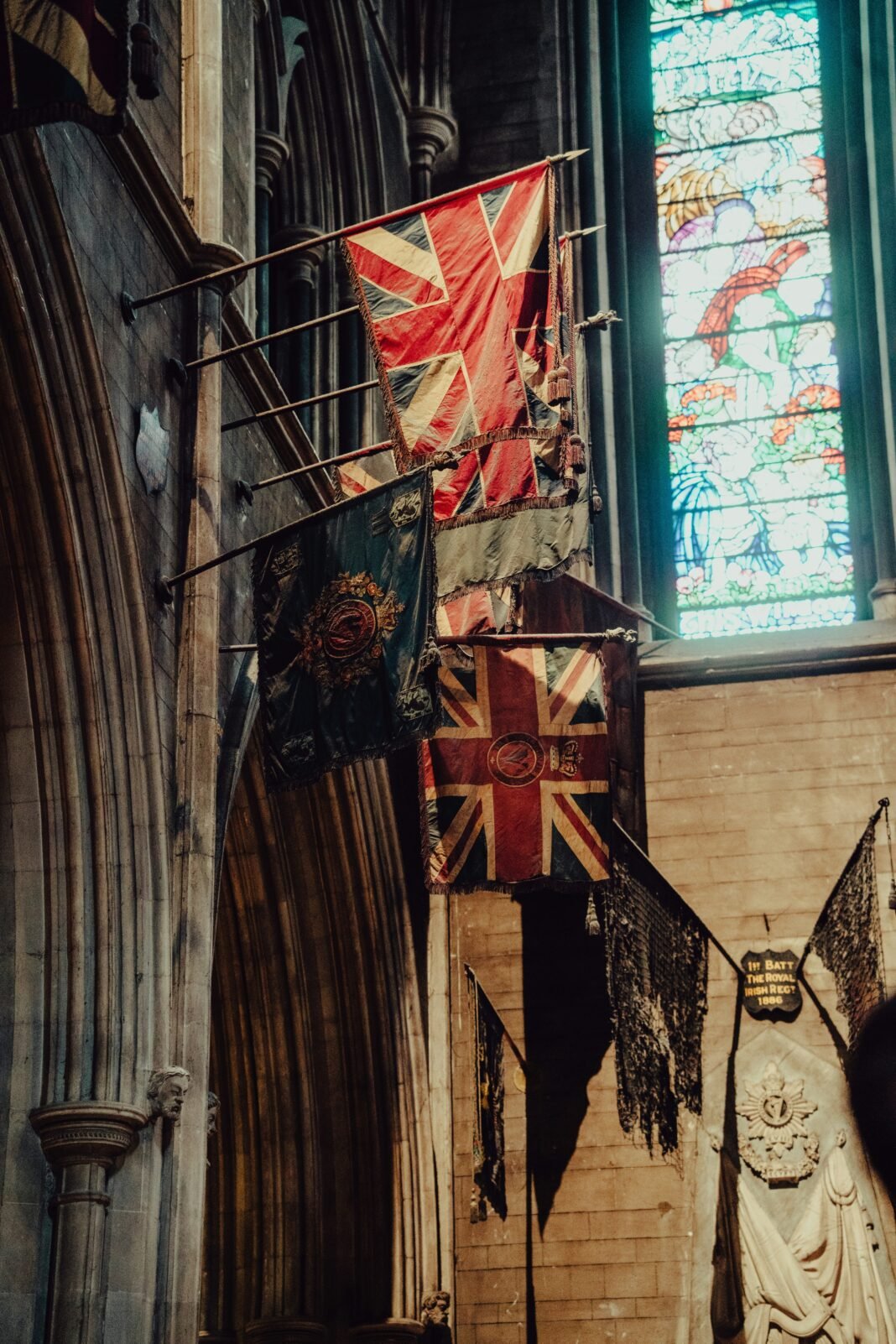
I became conscious of how complicated these questions can be whilst working at Saint Patrick’s Cathedral in Dublin. Before moving to Ireland, I had given little thought to the sensitivities surrounding Irish involvement in the British military. The flags of Irish regiments of the British Army hang within our National Cathedral, in the Republic. They provoked some interesting encounters: Americans (claiming some connection to that Irish diaspora worldwide) who were genuinely offended by their presence; local visitors fascinated by their history; and some groups who didn’t even realise that they were not, in fact, standing in the United Kingdom. Occasionally, I was wheeled out as the friendly Brit — a reassuring presence in unfamiliar surroundings — for loyalist groups visiting from Northern Ireland, some of whose members had never been south of the border.
These encounters taught me something about the burdens we attach to the past. The same flags could represent honourable service, imperial oppression, family sacrifice, or an unwelcome reminder of a history someone would rather leave behind. The same goes for the symbol of the poppy.
In the Irish Free State, remembrance of the Great War occupied an uncomfortable place in the construction of an independent national identity. Tens of thousands of Irishmen had served in the British forces, and communities continued to remember their dead through Armistice Day ceremonies every year. Yet to commemorate Irishmen who had died in British uniform was to acknowledge a past that did not fit neatly within the story the new state wished to tell. Their memory was never entirely extinguished, but it was often marginal to the official remembrance of the fledgling nation.
There is a temptation to believe that the intervening century has taught humanity something about war. The evidence is difficult to find. We continue to fight over territory, ideology, and national pride; we continue to send young people into conflicts whose consequences will outlive them; and we continue to discover, with apparently inexhaustible surprise, the suffering that war visits upon soldiers and civilians alike. We commemorate the dead, then return to the business of preparing for the next conflict.
Christian remembrance ought to trouble this arrangement. In Scripture, remembering is frequently a moral obligation. Israel is commanded to remember its slavery in Egypt, and that memory is made the basis for its treatment of the stranger. At the heart of Christian worship stands Christ’s command to remember him: a remembrance centred upon the innocent victim of violence, whose response to the world’s cruelty was the self-giving love of the Cross.
Such remembrance must surely ask something of us. We can honour the courage of those who served without romanticising war; mourn the dead without turning their deaths into a national triumph; and acknowledge sacrifice whilst asking about the decisions that made it necessary.
‘For your tomorrow, we gave our today.’ These words are both a gift and an accusation. What have we made of that tomorrow? The Christian hope is that swords might yet be beaten into ploughshares, and that the sacrifice of the dead might help to teach the living another way. ‘Lest we forget’ must therefore be more than a promise to recall the fallen. It must be an exhortation to remember the suffering war brings, and the peace that Christ calls us to make. Otherwise, we may honour the dead with perfect solemnity, whilst betraying them in the world we leave behind.